
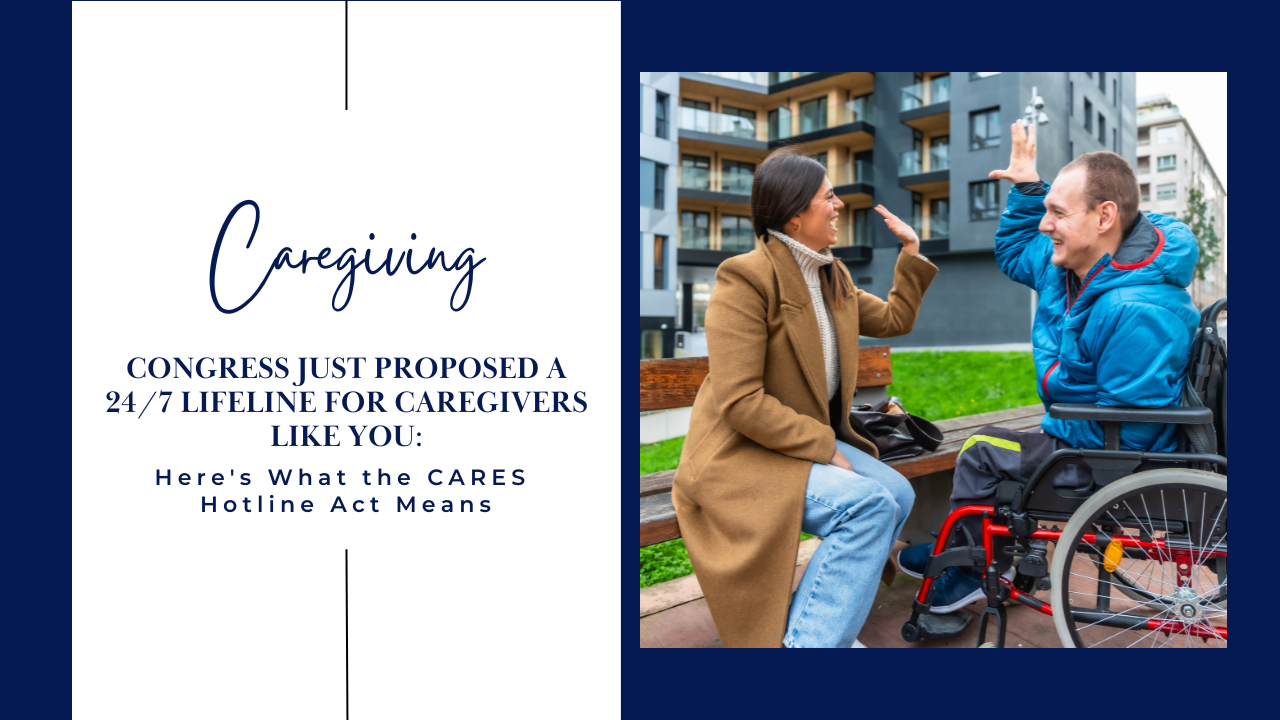
Congress Just Proposed a 24/7 Lifeline for Caregivers Like You: Here’s What the CARES Hotline Act Means
It’s 2 AM. Your loved one had a rough night – maybe a meltdown, maybe a medical scare, maybe just one of those nights where nothing works and everything feels heavy.
You’re sitting in the dark, phone in hand, scrolling through pages that don’t have the answer you need.
You’re not looking for a diagnosis. You’re not looking for a program.
You’re looking for someone who gets it.
Someone who’s been where you are. Someone who can say…
“I hear you. You’re not failing. Here’s what might help.”
Right now, that someone is hard to find at 2 AM.
But a new bill in Congress is trying to change that.
What Is the CARES Hotline Act?
On April 30, 2026, Congressman Rob Menendez introduced the Caregiver Access to Resources and Emotional Support (CARES) Hotline Act.
Legislation that would create the first-ever federal national 24/7 hotline dedicated specifically to caregivers of individuals with developmental disabilities.
Not a general mental health line. Not a crisis number for the person you’re caring for.
A hotline built for you – the caregiver – staffed by trained professionals who understand the unique pressures of caring for someone with developmental or intellectual disabilities.
Here’s what the bill would provide:
Emotional support and mental health referrals. Trained staff available around the clock to listen, provide brief intervention, and connect you with mental health resources when you need them.
Peer-to-peer counseling. The act specifically calls for peer counseling that connects caregivers with others who have similar experiences.
Not just professionals telling you what to do – other caregivers who’ve lived it.
A national resource database. The bill would require the creation and ongoing maintenance of a national database of services, supports, and resources for IDD caregivers, updated regularly.
Think of it as a constantly refreshed map of what’s actually available to you – locally and nationally.
Trained staff with specialized knowledge. This wouldn’t be a generic call center.
The act mandates training programs for all hotline personnel, with priority given to organizations that partner with community-based groups already doing this work on the ground.
Why This Matters
If you’re a caregiver in Hampton Roads – or anywhere in the country – none of this will surprise you: there is no national support infrastructure specifically designed for IDD caregivers.
There are crisis lines for mental health emergencies. There are helplines for elder care.
There are poison control centers and domestic violence hotlines and suicide prevention lifelines.
All critical. All necessary.
But if you’re a parent of an adult child with Down syndrome who’s struggling with a transition, or a spouse caring for someone with a traumatic brain injury who needs help navigating waiver services at 10 PM, or a grandmother raising a grandchild with autism who just needs to hear another human voice – there’s no dedicated number to call.
The Autism Society of America called it a meaningful step toward ensuring caregivers have access to timely information and mental health resources when they need them most.
Whole Spectrum Autism noted that far too many families are told to figure autism out alone.
That rings true for every disability category, not just autism.
The Numbers Behind the Need
We know from working with families across Hampton Roads for nearly 20 years that caregiver burnout isn’t an occasional problem – it’s a systemic one. Research consistently shows what we see every day:
Caregivers of individuals with developmental disabilities experience higher rates of depression, anxiety, and chronic stress than the general population.
They’re more likely to delay their own medical care. They’re more likely to report feeling isolated and unsupported.
Multiple studies have found that family caregivers of adults with IDD face elevated physical and psychological health risks that often go unaddressed for years.
And here’s the part that doesn’t show up in the research: the guilt. The guilt of feeling overwhelmed by a role you chose out of love.
The guilt of wondering if you’re doing enough. The guilt of needing help and not knowing where to find it.
A dedicated hotline doesn’t solve all of that. But it puts a floor under it. It says: you are seen, you matter, and help exists.

Where Things Stand
The CARES Hotline Act was introduced on April 30, 2026 and referred to the House Committee on Energy and Commerce.
It’s co-sponsored by a group of House members, including Representatives Lou Correa, Zoe Lofgren, Bennie Thompson, and Frederica Wilson, along with Delegate Eleanor Holmes Norton.
It’s endorsed by the Autism Society of America, Autism Speaks, and Whole Spectrum Autism.
It’s early in the legislative process — the bill has been introduced, but it hasn’t been voted on yet.
That means right now is exactly when your voice matters most.
What You Can Do
Contact your representative. If you live in Virginia’s 2nd Congressional District (which covers most of Hampton Roads), let your member of Congress know you support the CARES Hotline Act.
A quick phone call or email to their local office goes further than you might think. You can find your representative’s contact information at house.gov.
Share your story. Legislators respond to real stories from real constituents.
If you’ve ever needed support at an hour when none was available – or if you’ve gone through a period where you had no one to talk to who understood your situation – that story matters. Write it down. Send it.
Talk about it. Mention this bill in your support group, your church group, your online community.
Most caregivers don’t know this legislation exists. The more families who know, the more pressure builds for action.
What’s Available to You Right Now
While we wait for Congress to act, we don’t want you sitting in the dark without options. Here are resources available to you today:
988 Suicide and Crisis Lifeline — Call or text 988. Available 24/7 for anyone in emotional distress. Not IDD-specific, but trained counselors are available. 988lifeline.org
SAMHSA National Helpline — 1-800-662-4357. Free, confidential, 24/7 referrals for mental health and substance use. samhsa.gov
Caregiver Action Network — Not a hotline, but a strong resource hub for caregivers of all types. caregiveraction.org
The Arc of Virginia — Statewide advocacy, resources, and connection for families of individuals with IDD. thearcofva.org
Your local CSB — Virginia’s Community Services Boards are your entry point for waiver services, crisis support, and local resources. Find yours at dbhds.virginia.gov.
And of course – CDS. We may not be a 24/7 hotline, but we are a team of people who have walked alongside hundreds of Hampton Roads families through the exact challenges you’re facing.
If you need help navigating services, understanding your options, or just need someone who understands — reach out.
Where CDS Stands
At Community Direct Services, we believe caregivers deserve more than an afterthought.
Our personal assistance, respite care, and companion care services exist because we know that supporting the whole family – not just the individual – is what makes community-based care actually work.
A national caregiver hotline wouldn’t replace what we do. It would complement it.
It would be the 2 AM resource that connects a family to a local provider like us the next morning.
It would be the bridge between “I’m drowning” and “here’s a next step.”
We’re rooting for this bill. And we’re rooting for you.
Call us: (757) 965-4899 Email: info@cdsva.com Visit: communitydirectservices.com
Sources & Resources
- U.S. Congress — CARES Hotline Act (H.R. 8620) Full Bill Text: congress.gov
- Rep. Rob Menendez — Press Release: Legislation to Establish National Hotline for Caregivers (April 30, 2026): menendez.house.gov
- Disability Scoop — National Hotline for IDD Caregivers Proposed (May 8, 2026): disabilityscoop.com
- LegiScan — H.R. 8620 Bill Tracking: legiscan.com
- 988 Suicide and Crisis Lifeline — 24/7 crisis support: 988lifeline.org
- SAMHSA National Helpline — 1-800-662-4357: samhsa.gov
- Virginia DBHDS — Find Your Local Community Services Board: dbhds.virginia.gov
- CDS Services — Personal Assistance, Respite Care, Companion Care, and more: communitydirectservices.com/our-services