
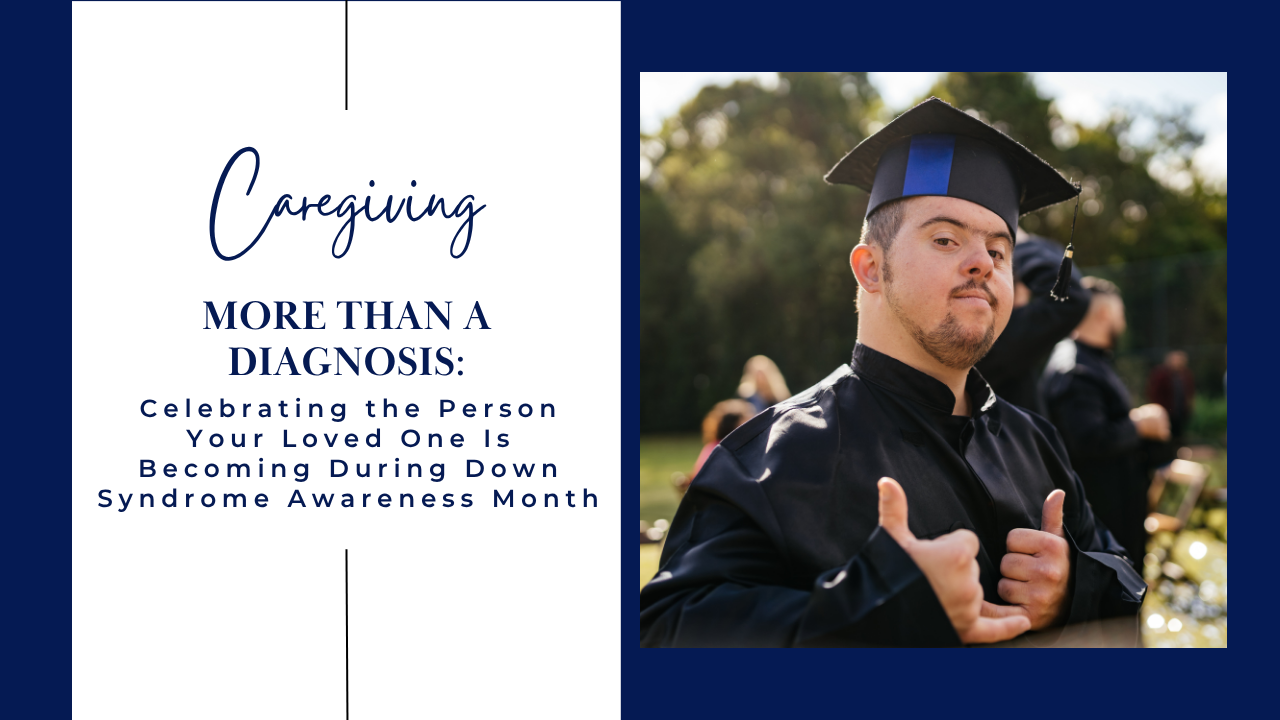
More Than a Diagnosis: Celebrating the Person Your Loved One Is Becoming During Down Syndrome Awareness Month
Close your eyes for a moment and think about your loved one.
Not the diagnosis. Not the paperwork, the appointments, or the forms with boxes that never quite fit.
Think about them. The laugh that fills the whole kitchen. The way they greet the dog like it’s been gone for a year.
The song they’ve played four hundred times and still love.
Now think back to the day you first heard the words Down syndrome.
Someone probably handed you a pamphlet. It told you about chromosomes and medical risks and milestones.
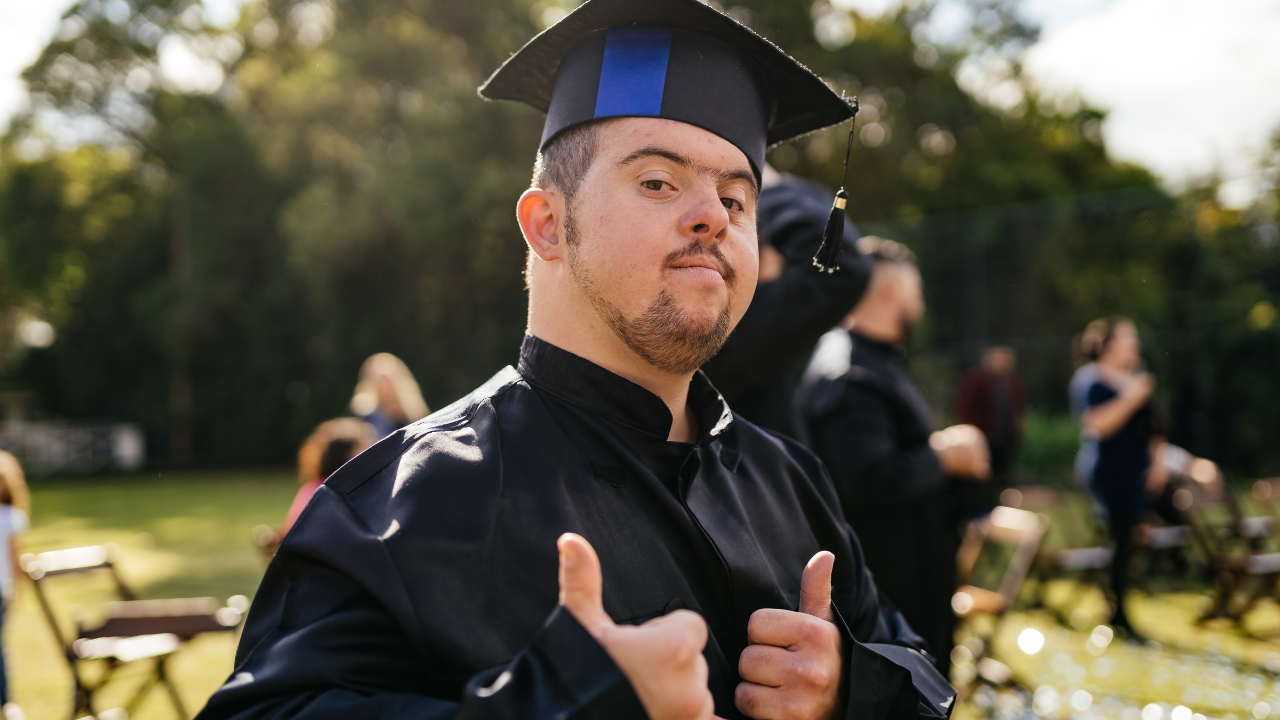
What it didn’t tell you about was the teenager, the young adult, the grown man or woman your loved one would become.
That’s what October is about.
Why October Matters
October is Down Syndrome Awareness Month. The National Down Syndrome Society (NDSS) helped have October proclaimed Down Syndrome Awareness Month back in the 1980s, and the goal hasn’t changed since: celebrate the abilities of people with Down syndrome, break down barriers, and promote advocacy.
Down syndrome is more common than many people realize. According to the Centers for Disease Control and Prevention (CDC), about 5,700 babies in the United States are born with Down syndrome each year, roughly 1 in every 640 births.
And here’s something that pamphlet from years ago may not have mentioned: people with Down syndrome are living far longer than they used to. Both the CDC and the National Down Syndrome Society report that life expectancy for people with Down syndrome has increased dramatically in recent decades, with many now living well into adulthood.
That’s a remarkable change. And it changes the questions families like yours are asking.
When “Awareness” Grows Up With Your Loved One
A lot of what you’ll see this month features adorable toddlers and kids in blue-and-yellow shirts. We love those pictures too.
But if your loved one is 20, or 35, or 50, awareness can feel like it was designed for someone else’s stage of life.
Because the questions change as your loved one gets older:
Who will they spend their days with now that school is over?
Could they work? Could they live somewhere other than home someday?
Who will be there for them when I can’t be?
These aren’t signs that you’re doing something wrong. They’re signs that your loved one is living a full life, one long enough to need a plan.
NDSS puts it simply: people with Down syndrome attend school, work, have meaningful relationships, vote, and contribute to their communities.
The goal isn’t just keeping your loved one safe. It’s helping them keep growing.
Words Matter (And Your Loved One Is Listening)
One of the simplest ways to celebrate this month is to pay attention to language. NDSS’s preferred language guide offers a few easy shifts you can share with family, teachers, coworkers, and even well-meaning strangers:
- Put the person first. Say “a man with Down syndrome,” not “a Down syndrome man.”
- It’s “Down syndrome,” not “Down’s.” The condition is named after the English physician who described it; he didn’t have it.
- People have Down syndrome. They don’t “suffer from” it. NDSS describes it as a condition, not a disease.
- Be specific instead of saying “special needs.” NDSS recommends naming the disability rather than using a catch-all label.
- Say “typical” instead of “normal” when comparing to people without disabilities.
It might feel small.
But you know better than anyone how much it stings when someone talks about your loved one instead of to them.
Language is where respect starts.
Staying Healthy Through Every Stage
Longer lives bring new health considerations. NDSS notes that people with Down syndrome have a higher risk for certain conditions, including heart defects, thyroid conditions, hearing problems, and Alzheimer’s disease, and that many of these conditions are now treatable.
That makes consistent, observant daily support even more important as your loved one ages.
Small changes in mood, memory, sleep, or routine are often first noticed by the people who see your loved one every day, not the doctor they see twice a year.
If you notice something new, write it down and bring it to their next appointment.
Celebrating Right Here in Hampton Roads
You don’t have to travel far to connect with people who get it.
The Down Syndrome Association of Hampton Roads has been supporting local families with education, support, and social opportunities across Southeast Virginia, and is now joining the Virginia Down Syndrome Association to form VDSA Hampton Roads. Membership for families is free.
VDSA is also hosting its Step UP for Down Syndrome event at Mount Trashmore Park in Virginia Beach this fall, carrying on Hampton Roads’ tradition of families, friends, and neighbors walking together at Mount Trashmore to celebrate people with Down syndrome. Check the VDSA site for this year’s date and registration details.
Can’t make it in person? NDSS offers 31 shareable fact cards for social media throughout October. Posting a photo of your loved one doing something they love, with a fact alongside it, is a powerful way to help your own circle see the person, not the label.
Planning for the Adult They’re Becoming
If this month has you thinking about the future, here are a few places to start:
- Know where you stand with the DD Waiver. Virginia’s Developmental Disability (DD) Waivers are Medicaid programs that fund support at home and in the community, from personal assistance to companion care to residential options. Our post The Waiting List Isn’t a Line explains how slots are assigned. And if you’ve recently been offered a slot, don’t miss our new post, You Got the Waiver Slot. Now What? (link to Post 1 once published)
- Look into an ABLE account. ABLE accounts let people with disabilities save money without jeopardizing most means-tested benefits. Virginia’s program, ABLEnow, is open to people whose disability began before age 46 and who meet the disability criteria. Under the federal ABLE Age Adjustment Act, that onset age rose from 26 to 46 on January 1, 2026. Because Down syndrome is present from birth, the age-of-onset requirement isn’t a barrier for your loved one at any age.
- Build in real breaks for yourself. The caregiver who never rests eventually can’t. Respite care gives you a scheduled break while someone you trust supports your loved one. Our post on the five-year renewal of the Lifespan Respite Care Program explains why now is a good time to ask about it.
- Start the conversation early. Talk with your loved one, in whatever way they communicate best, about what they want their days, work, and home to look like.
How We Help
At CDS, Down syndrome is one of the conditions we support every day, and for almost 20 years we’ve followed one principle above the rest: see the person first, not the diagnosis.
One of our guiding principles is Talents and Gifts: making sure every person we support has real opportunities to share what they’re good at.
That might look like a companion who helps your daughter get to her volunteer shift, an in-home support professional who’s working on cooking skills because your son wants to make dinner for the family, or respite that gives you an afternoon to breathe.
Our Companion Care, Personal Assistance, Supportive In-Home, Respite, and Sponsored Residential services are all built around what your loved one wants their life to look like, not just what they need help with.
This October, we’re celebrating the people we’re lucky enough to know. The artists, the jokers, the huggers, the workers, the friends.
If you’d like to talk about what support could look like for your loved one’s next chapter, we’d love to hear from you.
Call us at (757) 965-4899, email info@cdsva.com, or visit communitydirectservices.com. We’re here Monday through Friday, 9:30am to 4:30pm, at 5705 Thurston Ave., Suite 101, in Virginia Beach.
Sources & Resources
-
- National Down Syndrome Society (NDSS), Down Syndrome Awareness Month: ndss.org
- NDSS, Facts, Myths & Truths About Down Syndrome: ndss.org/myths-truths
- NDSS, Preferred Language Guide: ndss.org/preferred-language
- Centers for Disease Control and Prevention, Living with Down Syndrome: cdc.gov
- Down Syndrome Association of Hampton Roads / VDSA Hampton Roads: dsahr.org
- Virginia Down Syndrome Association, Step UP for Down Syndrome: virginiadsa.org/step-up
- ABLEnow (Virginia’s ABLE program), Eligibility: ablenow.com
- ABLE National Resource Center, ABLE Age Adjustment Act Fact Sheet: ablenrc.org
- CDS Blog, “The Waiting List Isn’t a Line: How Virginia Really Decides Who Gets a Waiver”: communitydirectservices.com
- CDS Blog, “Congress Just Locked In 5 More Years of Respite Care Funding: Here’s What That Means for Your Family in Hampton Roads”: communitydirectservices.com
- Community Direct Services, Our Services: communitydirectservices.com/our-services