

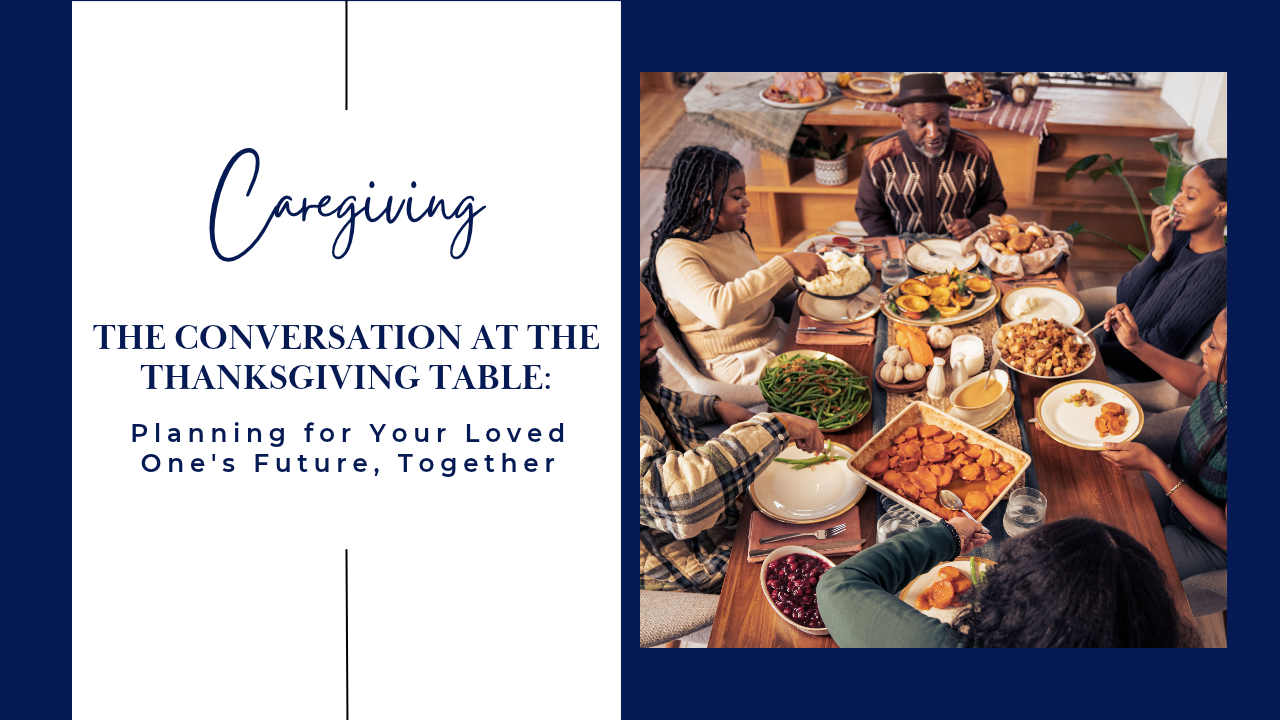
The Conversation at the Thanksgiving Table: Planning for Your Loved One’s Future, Together
There’s a question many parents carry quietly for years.
It shows up late at night. In the doctor’s waiting room. When your back aches a little more than it used to.
What happens to my child when I can’t do this anymore?
Most families never say it out loud. It feels too heavy, too far off, or too painful to put into words. So it waits.
But on Thursday, November 26, a lot of Hampton Roads families will be sitting around the same table. Parents, siblings, grandparents, maybe an aunt who flew in from out of state. It might be the only day this year everyone who loves your son or daughter is in one place.
That makes it a good day to start the conversation. Not finish it. Just start.
You’re Not the Only Family Putting This Off
If you haven’t made a plan yet, you’re in very good company.
An estimated 1.3 million Americans with intellectual and developmental disabilities live with a caregiver over age 60, according to a July 2026 commentary in the Milbank Quarterly. And many of those families haven’t put a transition plan in place.
The authors point to a study of caregivers for adults with fragile X syndrome. Only 15 of 39 caregivers had concrete plans for who would provide care, or where their loved one would live, if they could no longer do it themselves. One parent put it this way: their family’s motto was to “live one day longer” than their child.
If that line hit you in the chest, we understand. So many parents feel exactly that way.
The trouble is that hope isn’t a plan. The Milbank authors note that when families delay this conversation, critical decisions often get made during a crisis, by relatives who don’t have basic information about their loved one’s medical and daily needs.
The co-author of that piece lived it himself. His mother-in-law died suddenly, with no plan in place, and her son with a developmental disability moved 760 miles from the only home he’d known.
Why Siblings Need to Be in the Room
Here in Virginia, the state is paying attention to this too.
In its 2026 assessment of supports for family caregivers, the Virginia Board for People with Disabilities found that siblings often become future advocates and caregivers, but rarely get the information or preparation to do it well. The Board recommended a statewide sibling program specifically to reduce the “crisis-based” handoffs that happen when aging parents can no longer provide care.
Many parents avoid including their other children because they don’t want to burden them. That’s a loving instinct. But silence doesn’t remove the burden. It just means your other children will pick it up later, without a map.
Bringing siblings in now, while you can answer their questions, is one of the kindest things you can do for all of your children.

Five Questions Worth Asking This Thanksgiving
You don’t need a binder or a lawyer at the dinner table. You just need a starting point. Here are five questions to open the door, whether it’s over pie, on a walk after dinner, or in a quiet moment Friday morning.
1. “What does a good life look like for [your loved one] in ten years?” Start with hope, not logistics. Where would they want to live? What do they love to do? Who are their people? And whenever possible, ask your loved one directly. This is their future.
2. “If something happened to us tomorrow, who would step in first?” Not forever. Just first. Who would answer the phone, make sure medications are taken, and keep routines steady?
3. “Where’s the information someone would need?” Doctors, medications, Medicaid and waiver details, Support Coordinator contact info, the little things that prevent a meltdown. If it only lives in your head, it isn’t a plan yet.
4. “How do we want decisions to be made as [your loved one] gets older?” There’s more than one option, and full guardianship isn’t the only one. (More on that below.)
5. “What do we each need to learn to feel ready?” Siblings and relatives often want to help but don’t know how the system works. Name the gaps, then fill them one at a time.
Four Things to Put in Place This Year
Once the conversation starts, these are the practical pieces that turn good intentions into real protection.
A Letter of Intent
A letter of intent isn’t a legal document. It’s a detailed, written guide to your loved one’s life: daily routines, medical history, favorite foods, fears, what calms them, what brings them joy. The Special Needs Alliance describes it as one of the most important parts of a special needs plan, because it fills the gaps no legal document can.
Write it in your own voice. Keep it somewhere family can find it. And update it once a year. Thanksgiving weekend is a great annual reminder.
A Decision-Making Plan
Virginia recognizes Supported Decision-Making Agreements under Virginia Code § 37.2-314.3. They let an adult with an intellectual or developmental disability choose trusted supporters to help them understand options and make their own decisions, rather than handing those decisions to someone else.
For some people, guardianship is still the right fit. For others, a Supported Decision-Making Agreement, paired with a power of attorney or advance directive, protects their safety and their independence. The Virginia Department of Behavioral Health and Developmental Services (DBHDS) offers a free template and step-by-step instructions.
A Financial Foundation That Protects Benefits
If your loved one receives Supplemental Security Income (SSI), they can generally have no more than $2,000 in countable resources. That limit hasn’t been raised since 1989, even as the maximum federal SSI payment rises to $1,029 a month next year.
Well-meaning relatives can accidentally put benefits at risk with a cash gift or an inheritance. Two tools help:
- An ABLE account. Virginia’s program, ABLEnow, lets family and friends contribute up to $20,000 in 2026, and for SSI recipients, generally the first $100,000 doesn’t count against the resource limit. Since January 2026, people whose disability began before age 46 may be eligible.
- A special needs trust. For larger amounts or an inheritance, a special needs planning attorney can help you set up a trust that supplements, rather than replaces, public benefits.
If grandparents ask what to give for the holidays, a contribution to an ABLE account is a gift that keeps giving.
A Living Arrangement Plan B
Where would your loved one live if your home were no longer an option? It’s worth exploring now, calmly, instead of later, urgently. In Virginia, options can include support in your loved one’s own home, a sponsored family home, or other community settings, often funded through a DD Waiver.
If your family is still waiting on a waiver, our guides The Waiting List Isn’t a Line and You Got the Waiver Slot. Now What? are good next reads.
Free Help Getting Started
You don’t have to figure this out alone:
- The Arc’s Center for Future Planning offers free, person-centered planning guides for parents, siblings, and people with IDD, including an online tool to build your plan step by step.
- DBHDS Supported Decision-Making resources include Virginia’s official agreement template and plain-language FAQs.
- ABLEnow is Virginia’s ABLE savings program.
- VA is for Sibs connects Virginia brothers and sisters of people with disabilities.
How We Help
At CDS, planning for the future is woven into how we support families every day. Through Supportive In-Home and Sponsored Residential services, we help individuals build the daily living, social, and self-help skills that make more living options possible down the road. And we work alongside families so the people who love your son or daughter, now and later, understand what helps them thrive.
We’ve walked beside Hampton Roads families since 2005. We’ve seen what happens when a plan is in place, and we’ve seen what happens when it isn’t. If you’d like to talk through what a future plan could look like for your family, we’re here.
Start Small. Start This Year.
You don’t need every answer by Thanksgiving. You just need to stop carrying the question alone.
Say it out loud. Let the people who love your child help you hold it. That’s not giving up on being there for them.
It’s making sure they’re never without someone who is.
Ready to talk about your family’s next steps? 📞 (757) 965-4899 📧 info@cdsva.com 🌐 communitydirectservices.com ⏰ Monday through Friday, 9:30 AM to 4:30 PM
This post is for general information and isn’t legal or financial advice. For guardianship, trusts, or benefits planning specific to your family, please consult a qualified special needs planning attorney.
Sources & Resources
- Milbank Quarterly, “More than 1 Million Americans with an Intellectual and Developmental Disability Live with a Caregiver over the Age of 60” (July 2026): milbank.org
- Virginia Board for People with Disabilities, 2026 Assessments (July 1, 2026): vbpd.virginia.gov
- Special Needs Alliance, “Letter of Intent Gives Valuable Advice to Future Caregivers”: specialneedsalliance.org
- Virginia DBHDS, Supported Decision-Making and Supported Decision-Making Agreements: dbhds.virginia.gov
- Social Security Administration, Understanding SSI: Resources: ssa.gov
- BenefitsUSA, “SSI Resource Limits 2027”: benefitsusa.org
- Disability Scoop, “SSI, Social Security Benefits Set To Rise” (October 14, 2026): disabilityscoop.com
- ABLEnow, Contributions: ablenow.com
- ABLEnow, “2026 Marks a Milestone Year for ABLEnow” (January 26, 2026): globenewswire.com
- The Arc’s Center for Future Planning: futureplanning.thearc.org
- VA is for Sibs: vasibs.org
- CDS Blog, “The Waiting List Isn’t a Line”: communitydirectservices.com
- CDS Blog, “You Got the Waiver Slot. Now What?”: communitydirectservices.com
- CDS Services: communitydirectservices.com/our-services