

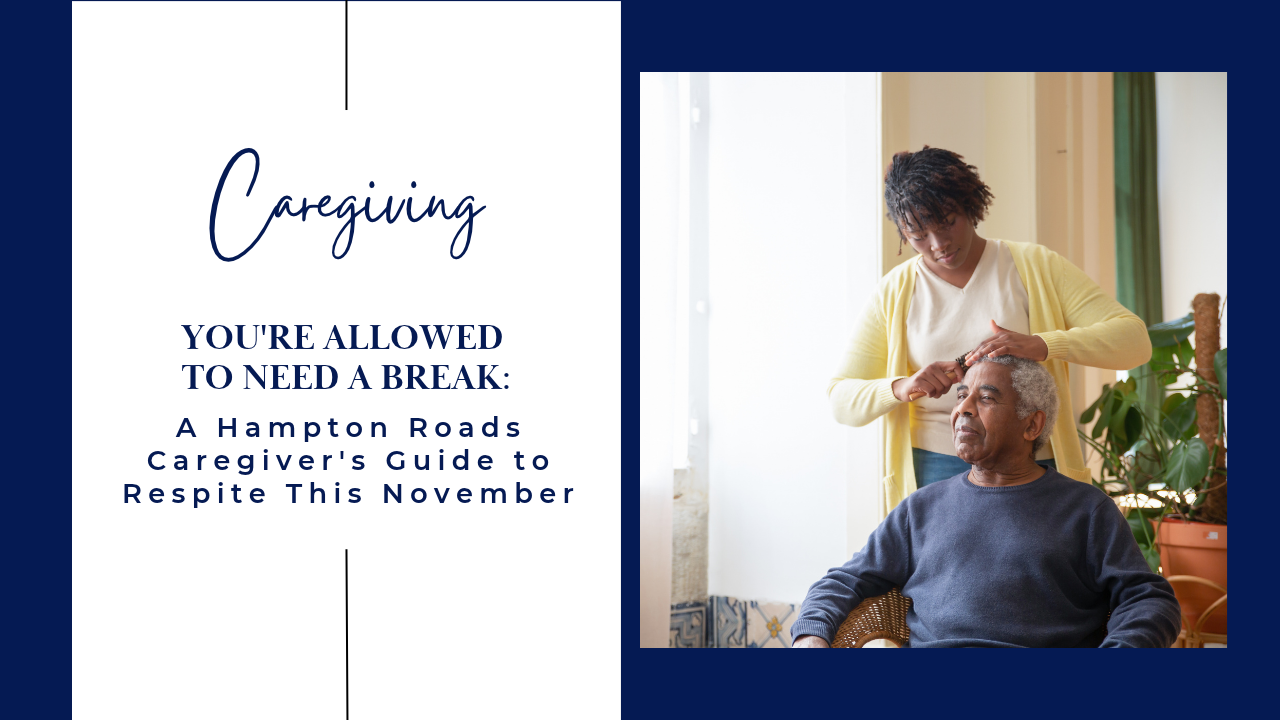
You’re Allowed to Need a Break: A Hampton Roads Caregiver’s Guide to Respite This November
When was the last time you had an hour that wasn’t already spoken for?
Not an hour squeezed between a therapy appointment and a work call. Not the twenty minutes in the car before you walk back into the house.
A real hour, where nobody needed you and your phone stayed quiet.
If you had to think hard about that, you’re not alone. And you’re not doing anything wrong.
November is National Family Caregivers Month. This year’s theme, from the Caregiver Action Network, is “Care Connects Us.”
At Community Direct Services, we think that’s exactly right. Because the hardest part of caregiving usually isn’t the work itself.
It’s doing it alone.
You Might Be a Caregiver and Not Even Call Yourself One
Here’s something that surprises a lot of families. According to the Caregiver Action Network, about 40% of caregivers don’t identify themselves as caregivers, which makes them less likely to look for help.
You might think of yourself as “just Mom.” Or “just his brother.” Or “just doing what any family would do.”
But if you’re managing medications, coordinating appointments, handling meltdowns at 2 AM, filling out waiver paperwork, and planning your whole week around someone else’s needs?
You’re a caregiver. That word matters, because it’s the key that opens the door to support you’re entitled to.
What Virginia Just Learned About Families Like Yours
This summer, the Virginia Board for People with Disabilities (VBPD), the state’s official developmental disabilities council, released a formal assessment of how Virginia supports family caregivers. If you’ve ever felt like the system wasn’t built with you in mind, the findings will sound familiar.
The financial weight is real. Virginia family caregivers spend more than $7,200 a year, roughly 26% of their income, on caregiving costs, including out-of-pocket expenses and lost wages. And 45% of Virginia family caregivers have faced financial hardship because of caregiving, like draining savings, falling behind on bills, or delaying retirement.
So is the emotional weight. About 42% of Virginia caregivers report high emotional stress in their caregiving role.
And respite is one of the biggest gaps. The Board named respite care, meaning short-term relief so you can rest, as one of the most significant unmet needs for Virginia’s family caregivers.
Here’s the thing: none of that is a character flaw. It’s a math problem. Too much need, not enough support, and families absorbing the difference.
Respite Isn’t a Luxury. It’s Part of the Care Plan.
A lot of parents feel guilty even saying the word “respite.” It can feel like asking for a break means you’re asking to be away from your loved one.
It doesn’t.
The VBPD put it plainly in its report: respite is not a luxury.
It’s a preventive support that reduces caregiver stress, keeps families stable, and lowers the chance of a crisis that leads to emergency care or an out-of-home placement.
In other words, taking care of yourself is one of the ways you take care of them.
And honestly? Your loved one benefits from time with other trusted people, too. New faces, new routines, new skills. That’s not abandonment. That’s community.

Where Hampton Roads Families Can Find Respite
Respite in Virginia comes from a few different places, and most families don’t know about all of them. Here’s a plain-language map.
1. Respite Through Your DD Waiver
If your loved one has a Developmental Disabilities (DD) Waiver, Virginia’s Medicaid program that pays for home and community-based support, respite may already be available to you. Under Virginia’s waiver regulations, respite can cover up to 480 hours per state fiscal year for eligible individuals.
That’s a meaningful amount of time. Yet we regularly meet Hampton Roads families who have hours in their plan they’ve never used, simply because nobody walked them through how to start.
One important catch: waiver respite is designed for families with an unpaid primary caregiver in the home. If you are the paid caregiver for your loved one, especially as a parent of a minor child or a spouse (what the state calls a “legally responsible individual”), you’re currently not eligible for waiver respite. The VBPD has recommended that Virginia restore respite for those families, but as of now, the gap remains.
Your next step: Ask your Support Coordinator at your local Community Services Board (CSB) how many respite hours are in your loved one’s plan, and whether you’re using them.
2. The Virginia Lifespan Respite Voucher Program
This program, run by the Virginia Department for Aging and Rehabilitative Services (DARS), reimburses family caregivers up to $595 per household per year for short-term respite. It’s open to Virginia caregivers of a loved one of any age with a documented disability or medical condition, as long as you live with them at least part-time.
A few things to know:
- You choose and hire the respite provider. The provider must be at least 18 and can’t live in your home.
- The program reimburses up to $20 an hour for an individual provider or $30 an hour for an agency.
- Funding is limited, and not everyone who applies is approved. According to the VBPD, the program serves about 250 families a year and can reimburse only about half of requests.
Your next step: DARS’s website currently lists funding “through June 30, 2026, or until funds run out.” Before you apply, email vlrvp@dars.virginia.gov to confirm whether new funding is available.
3. Support While You’re Still on the Waiting List
If your loved one is still waiting for a DD Waiver, you’re not out of options. Virginia’s Individual and Family Support Program (IFSP) offers once-a-year funding to people on the waiting list, which families can put toward needs that keep their loved one safe and supported at home. The application window opens once a year, usually in the fall, so sign up for IFSP email updates now so you don’t miss the next one.
If you’re unsure where your family stands on the waiting list, our post The Waiting List Isn’t a Line breaks down how Virginia actually prioritizes families.
4. Another Parent Who’s Been There
Sometimes the most valuable “break” is a conversation with someone who gets it. The Family to Family Network of Virginia, run through VCU’s Center for Family Involvement, connects you one-on-one with a trained Family Navigator. That’s a parent or family member of someone with a disability who can offer emotional support and help you navigate services. It’s free. Call (877) 567-1122.
A Few Ways to Use This Month Well
You don’t have to overhaul your life in November. Just pick one:
- Say the word out loud. “I’m a caregiver.” Then notice what support that opens up.
- Check your plan. Ask your Support Coordinator about unused respite hours.
- Put one break on the calendar. Even two hours. Treat it like a medical appointment, because in a way it is.
- Tell one person the truth. A friend, a sibling, another parent. “This is harder than I let on.”
How We Help
At CDS, respite care is one of the core services we provide. Our trained staff step in at home so you can rest, run errands, sleep, or just breathe, knowing your loved one is with someone who sees them, not just their diagnosis.
We know respite only works if you trust the person walking through your door. That’s why we take time to learn your loved one’s routines, preferences, and what makes a good day for them. And we’ve been doing this for Hampton Roads families since 2005, so we also understand the staffing pressures every family is feeling right now. (We wrote about that in The Caregiver Cliff.)
If you’re not sure what respite options your family qualifies for, we’re happy to talk it through with you. No pressure. Just a conversation.
You Matter, Too
This month, the whole country is pausing to say thank you to family caregivers. We want to say it to you directly.
Thank you for the appointments, the paperwork, the patience, and the love that doesn’t take days off.
And please hear this: needing a break doesn’t mean you love them any less. It means you’re human. And you deserve care, too.
Questions about respite or other support for your family? 📞 (757) 965-4899 📧 info@cdsva.com 🌐 communitydirectservices.com ⏰ Monday through Friday, 9:30 AM to 4:30 PM
Sources & Resources
- Caregiver Action Network, 2026 National Family Caregivers Month Partner Overview (“Care Connects Us”): caregiveraction.org
- Virginia Board for People with Disabilities, 2026 Assessments: Barriers to Navigating the DD Waiver Waiting List and Supports for Family Caregivers (July 1, 2026): vbpd.virginia.gov
- Virginia Administrative Code, 12VAC30-122-490 (DD Waiver Respite Service): law.lis.virginia.gov
- Virginia DARS, Lifespan Respite Voucher Program: dars.virginia.gov
- DBHDS Individual and Family Support Program (IFSP) Funding, My Life, My Community: mylifemycommunityvirginia.org
- Family to Family Network of Virginia, VCU Center for Family Involvement: cfi.partnership.vcu.edu
- CDS Blog, “The Waiting List Isn’t a Line”: communitydirectservices.com
- CDS Blog, “The Caregiver Cliff”: communitydirectservices.com
- CDS Services: communitydirectservices.com/our-services