

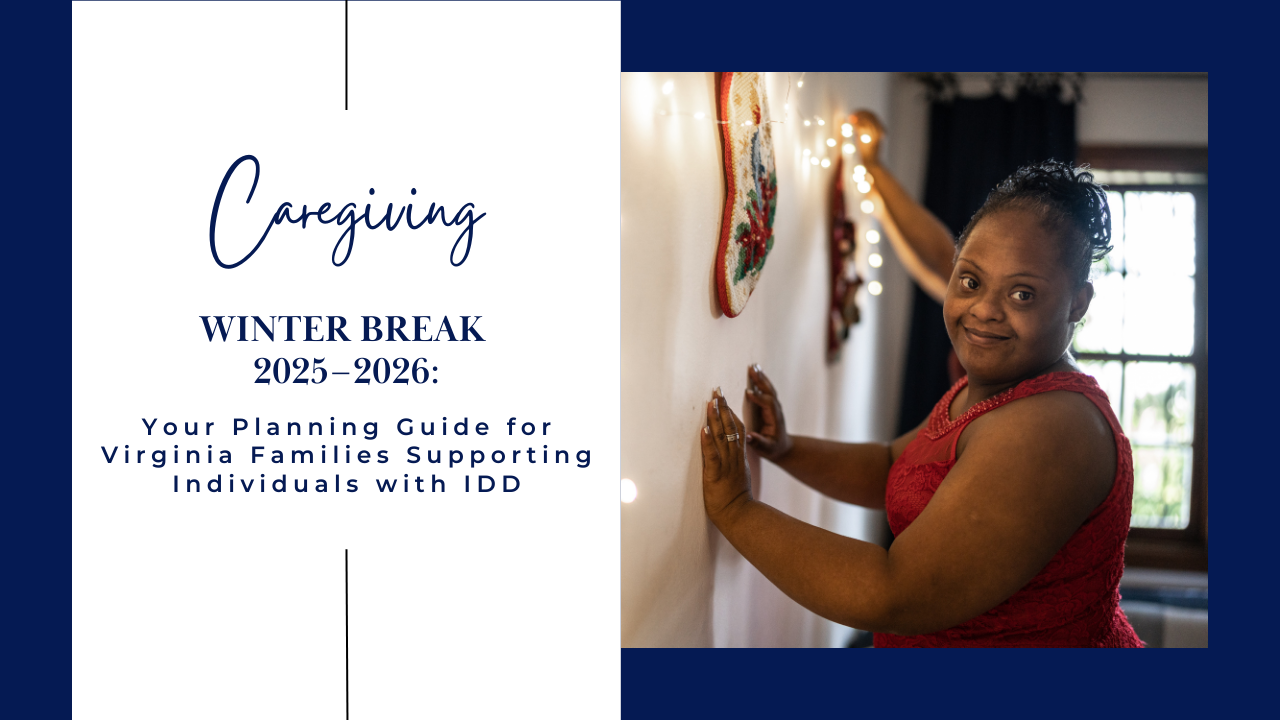
Winter Break 2025–2026: Your Planning Guide for Virginia Families Supporting Individuals with IDD
Winter break 2025–2026 runs December 20th through January 5th.
16 days without the school structure that supports daily regulation for individuals with intellectual and developmental disabilities.
The challenge isn’t the break itself.
It’s the sudden removal of environmental cues, predictable routines, and professional supports that help your loved one navigate each day.
When those disappear simultaneously, you’re managing dysregulation at home while coordinating reduced services and holiday demands.
This guide provides a realistic planning framework for the weeks ahead.
What Happens When Structure Disappears
Individuals with IDD rely on external structure to regulate internal states.
School provides consistent timing, sensory environments, social patterns, and activity sequences.
Remove that framework, and you’ll likely see:
Behavioral changes:
- Increased dysregulation or meltdowns
- Sleep disruption (difficulty falling asleep, early waking, irregular patterns)
- Heightened sensory sensitivities
- Resistance to any transitions
Caregiver impact:
- Extended periods of direct support without breaks
- Increased physical and emotional demands
- Limited access to respite or day programs
- Pressure to maintain holiday activities while managing escalation
This isn’t failure, it’s a predictable response to environmental change.
Understanding the mechanism helps you plan proactively instead of reacting in crisis mode.
Building a Functional Daily Framework
You don’t need an elaborate schedule. You need three elements:
- Predictable anchor points (wake time, meals, bedtime)
- Sensory regulation opportunities (movement and calming activities)
- Visual supports that make the day’s structure concrete
Sample Daily Structure
Adjust these times to fit your household’s natural rhythm:
Morning Block (7:00 AM – 12:00 PM)
- 7:00 AM: Wake + breakfast
- 7:30 AM: Visual schedule review (2 minutes at calendar or board)
- 8:00 AM: Movement activity (20-30 minutes)
- Neighborhood walk, indoor obstacle course, dance playlist, trampoline
- 9:00 AM: Independent activity (30-45 minutes)
- Preferred screen time, puzzle, building toys, sensory bin
- 11:30 AM: Transition warning (5-minute visual timer)
- 12:00 PM: Lunch
Afternoon Block (12:30 PM – 5:00 PM)
- 12:30 PM: Quiet activity (45-60 minutes)
- Drawing, audiobook, playdough, sorting activities
- 2:00 PM: Life skill or structured task (10-20 minutes)
- Folding laundry, setting table, organizing personal items
- 2:30 PM: Free choice or outing
- 4:30 PM: Calming transition activity
- Weighted blanket time, listening to music, gentle stretching
Evening Block (5:00 PM – Bedtime)
- 5:00 PM: Dinner preparation involvement (optional, based on ability)
- 5:30 PM: Dinner
- 6:00 PM: Family connection activity (15-30 minutes)
- Board game, collaborative art project, simple cooking
- 7:00 PM: Bedtime routine begins
- Bath, pajamas, teeth brushing, story/music, lights out
Making Structure Visible
Visual supports reduce anxiety about “what’s next”:
- Picture schedules: Photos or icons showing each activity in sequence
- First/Then boards: “First [non-preferred activity], Then [preferred activity]”
- Visual timers: Time Timer apps or physical timers that show time passing
- Countdown calendars: Days remaining until school returns
Purchase visual schedule supplies at Office Depot, Amazon, or print free templates from sites like Boardmaker Online or AACOG.
Indoor Activities for Hampton Roads Winter Weather
Our region’s December-January weather, gray skies, 35-45°F temperatures, rain, and wind – limits outdoor time. Planning indoor activities ahead prevents the 3:00 PM scramble.
Low-Preparation Activities
Sensory-based:
- Rice or bean bins with scoops and containers
- Water play in bathtub or large plastic bins
- Kinetic sand or playdough with tools
- Bubble wrap for popping (save from packages)
- Shaving cream on cookie sheets for drawing
Movement-based:
- Living room scavenger hunts (find 5 soft things, 3 blue things)
- Obstacle courses using couch cushions, tape lines, laundry baskets
- Dance parties with familiar music
- Balloon volleyball (gentle, indoor-safe)
- YouTube movement videos (Cosmic Kids Yoga, GoNoodle)
Cognitive/Fine Motor:
- Sorting activities (buttons by color, socks by pattern)
- Simple puzzles appropriate to ability level
- Matching games or memory cards
- Coloring books or dot-to-dot activities
- Lacing cards or large bead threading
Community Outings (Low Sensory Demand)
Library visits:
- Check schedules for quieter hours (typically weekday mornings)
- Many libraries have sensory-friendly spaces or collections
- Norfolk, Virginia Beach, Chesapeake, Newport News systems all offer accessibility resources
Indoor walking:
- MacArthur Center (Norfolk): Opens 10 AM, quietest before noon
- Peninsula Town Center (Hampton): Indoor/outdoor mix, moderate sensory level
- Lynnhaven Mall (Virginia Beach): Mall walkers welcome before store hours
- Local YMCA tracks (membership required, guest passes available)
Planning for sensory considerations:
- Visit during off-peak hours
- Bring noise-reducing headphones
- Pack familiar snacks and water
- Set a time limit before you arrive (20-30 minutes initially)
- Identify a “break space” or early exit plan
Short, successful outings build tolerance better than extended trips that end in overwhelm.
Managing Holiday-Specific Challenges
Coordinating Service Schedules
Most Virginia day programs and therapy providers reduce hours December 20–January 5. Plan now:
Action steps:
- By December 1: Confirm your provider’s holiday schedule
- By December 10: Request any additional respite hours through your service coordinator
- Create backup plan: Identify one alternate caregiver for emergency coverage
If you receive services through Community Direct Services, contact your coordinator about respite availability.
We typically see increased requests mid-December, early planning ensures better access.
Holiday Events and Gatherings
December brings sensory overload: lights, music, crowds, disrupted routines, unfamiliar foods, and extended family expectations.
Decision framework: Ask three questions about each potential event:
- Can we control sensory input? (volume, lighting, crowd size)
- Is there an exit strategy if dysregulation occurs?
- Does attending serve our family’s wellbeing, or external expectations?
Preparing for events you choose to attend:
- Bring a comfort kit:
- Noise-reducing headphones
- Fidget tools or chewable jewelry
- Preferred snack
- Visual schedule showing event sequence and departure time
- Establish a break space (car, quiet room, outdoor area)
- Set a specific departure time before you arrive
- Communicate your plan to hosts: “We’ll be there 2-4 PM, then heading out”
It’s professionally acceptable to decline events. “We’re keeping our schedule simple this year to support [name]’s regulation” is complete communication.
New Year’s Eve Considerations
Fireworks and neighborhood noise can trigger significant distress, particularly for individuals with auditory sensitivities.
Preparation strategies:
- Noise reduction: Noise-canceling headphones, white noise machines, familiar music at higher volume
- Safe space: Create a cozy retreat (weighted blanket, dim lighting, preferred activities)
- Early bedtime: Asleep before 10 PM avoids peak noise
- Practice runs: Use headphones and calming strategies during daytime to build familiarity
Alternative celebration:
- Noon “midnight” countdown with YouTube videos
- Family game night with special snacks
- Create your own “fireworks” with glow sticks and music
- Skip the tradition entirely – January 1 arrives regardless
Caregiver Sustainability During Break
Direct caregivers experience increased physical and emotional demands during school breaks. Acknowledging this reality and planning accordingly prevents crisis-level burnout.
High-Impact Sustainability Strategies
Micro-breaks (10-15 minutes): Research shows that frequent short breaks restore cognitive function better than infrequent long breaks. While your loved one engages in independent activity:
- Sit outside for 5 minutes
- Listen to one podcast episode
- Take a 10-minute walk around the block
- Close your eyes and practice box breathing (4 counts in, 4 hold, 4 out, 4 hold)
Simplify non-negotiables:
- Meals: Batch cook on weekends, use slow cooker recipes, order prepared meals, repeat the same 5 dinners
- Cleaning: Lower standards temporarily – surface-clean only
- Holiday expectations: Skip cards, simplify gifts, say no to commitments
Strategic respite use: Don’t reserve respite only for errands. Use respite hours for rest:
- Take a nap
- Sit in quiet without demands
- Engage in a hobby
- Meet a friend for coffee
Respite for restoration prevents caregiver burnout more effectively than respite for productivity.
Specific help requests: General requests (“Let me know if you need anything”) rarely result in support. Specific requests get results:
❌ “I might need help sometime” ✅ “Can you come Tuesday 2-4 PM so I can rest?”
❌ “We’re struggling with meals” ✅ “Could you drop off a lasagna Thursday? Disposable pan is fine.”
When Stress Escalates
Caregiver burnout has specific warning signs:
- Persistent irritability or emotional numbness
- Sleep disruption (difficulty falling asleep, waking to worry)
- Physical symptoms (headaches, digestive issues, muscle tension)
- Thoughts of escape or inability to continue
- Decreased ability to feel joy or connection
If you’re experiencing multiple warning signs:
- Contact your doctor about short-term support
- Reach out to your service coordinator about increasing supports
- Call a trusted friend or family member
- Contact the DBHDS 24/7 crisis line if thoughts become overwhelming: 1-844-627-4747
Your wellbeing directly impacts your ability to provide care. Addressing stress is maintenance, not selfishness.
Virginia-Specific Resources
Community Services Boards (CSBs)
Your local CSB coordinates IDD services and can help adjust supports:
- Norfolk CSB: (757) 823-1300
- Virginia Beach CSB: (757) 437-6400
- Chesapeake CSB: (757) 547-9334
- Portsmouth CSB: (757) 393-8618
- Hampton-Newport News CSB: (757) 788-0300
Additional Support Organizations
The Arc of Virginia
- Statewide advocacy and family support
- Website: thearcofva.org
- Phone: (804) 649-8481
Virginia Board for People with Disabilities (VBPD)
- Rights information and advocacy
- Website: vaboard.org
- Phone: 1-800-846-4464
Family-to-Family Health Information Center
- Navigation support for families
- Website: vafamilytofamily.org
- Phone: (855) 323-6244
Recreation and Movement Options
Hampton Roads YMCAs: Multiple locations with indoor tracks, pools, and gyms. Many offer sliding-scale memberships and sensory-friendly hours.
Local Parks and Recreation:
- Check city websites for adaptive recreation programs
- Many offer winter indoor programs specifically for individuals with disabilities
- Registration typically opens November for January programs
Planning Timeline
Early December (This Week)
- ✓ Confirm provider holiday schedules
- ✓ Request additional respite hours if needed
- ✓ Purchase visual schedule materials
- ✓ Stock up on preferred sensory items and snacks
- ✓ Create daily framework schedule
Mid-December (Week of Dec 10)
- ✓ Practice daily schedule before break begins
- ✓ Review visual supports with your loved one
- ✓ Prepare comfort kit for outings
- ✓ Finalize which holiday events to attend
- ✓ Communicate plans to extended family
Late December (Break Begins)
- ✓ Implement daily structure
- ✓ Adjust based on what’s working
- ✓ Protect caregiver breaks
- ✓ Use respite as scheduled
Early January (Week Before School)
- ✓ Begin sleep schedule adjustment (if needed)
- ✓ Reintroduce school-day morning routine
- ✓ Preview return to school using visual supports
- ✓ Coordinate with school team about transition support
How Community Direct Services Can Help
Community Direct Services provides respite and personal assistance services throughout the Hampton Roads region.
These services can be part of your long-term support plan for school breaks and daily needs.
Our services include:
- In-home respite care
- Community-based support
- Personal assistance with daily activities
- Flexible scheduling to match your family’s needs
Getting started:
- New families: Contact our intake team at (757) [phone] or [email]
- Current families: Reach out to your assigned service coordinator
- Questions about coverage: We work with most Virginia Medicaid waivers and can explain your options
We typically see increased respite requests by mid-December.
If you’re considering support for winter break or beyond, connecting now ensures better availability.
Final Considerations
Winter break doesn’t have to derail your family’s stability.
With advance planning, realistic structure, and appropriate support, these 16 days can be manageable, even restorative.
The strategies in this guide work because they’re based on how regulation actually functions: through predictable environmental cues, appropriate sensory input, and sustainable caregiver capacity.
You don’t need to implement everything.
Choose the 2-3 strategies most relevant to your family, and build from there.
Questions about planning ahead or accessing support services? Community Direct Services: (757) 965-4899 | info@cdsva.com | communitydirectservices.com
Community Direct Services supports individuals with intellectual and developmental disabilities throughout the Hampton Roads region. We provide person-centered services designed around each family’s unique needs.