


Standing Up Against Bullying: Protecting Students with Disabilities
When 14-year-old Marcus came home from his Virginia Beach middle school with his backpack torn and his confidence shattered, his mother knew this wasn’t typical teenage drama.
As a student with autism, Marcus had become a target, and his story reflects a disturbing pattern documented by federal education researchers…
Children with disabilities experience bullying at significantly higher rates than their peers.
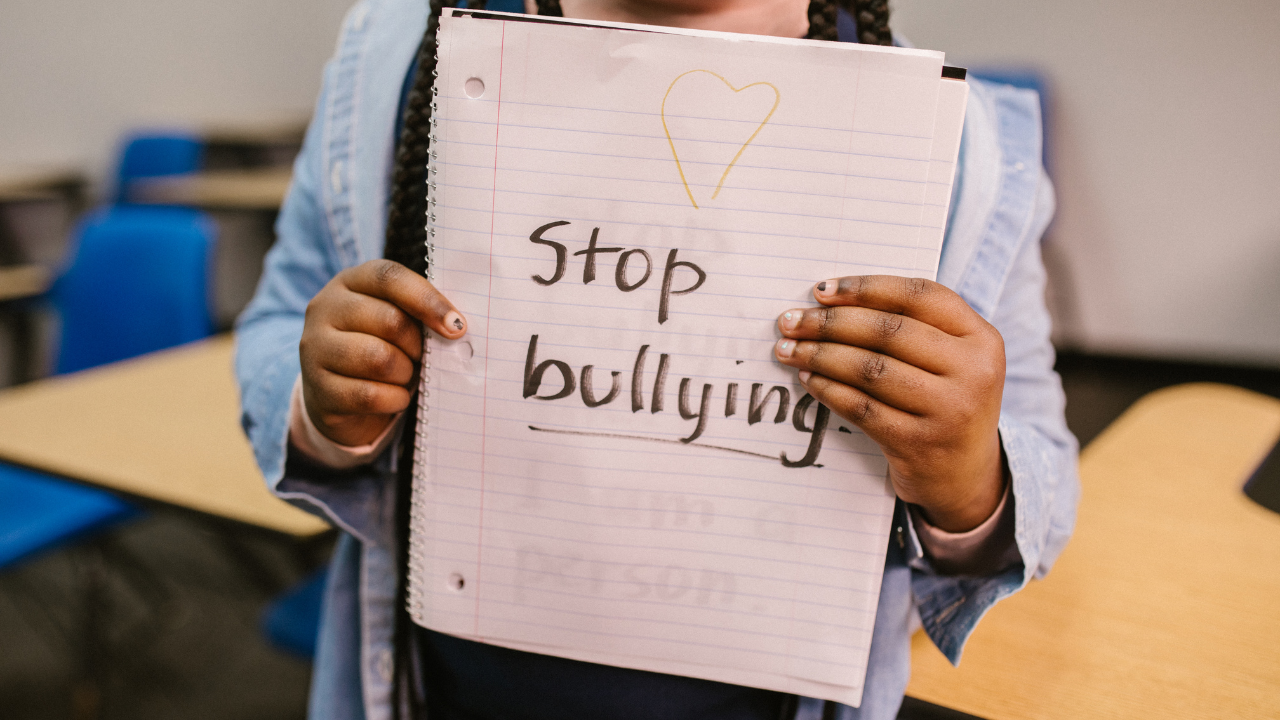
This isn’t just “kids being kids.” It’s a civil rights violation with real legal consequences for schools.
October is National Bullying Prevention Month, but for families of children with disabilities, protection can’t wait for awareness campaigns.
With Virginia’s strengthened anti-bullying laws and federal disability protections, you have more power than you realize to keep your child safe.
The hard truth: If you’re waiting for schools to handle bullying proactively, your child may suffer unnecessarily.
But when parents know the law and take swift action, schools respond, and children’s lives change.
Why Your Child Is at Higher Risk (And It’s Not Their Fault)
The statistics from the National Center for Education Statistics (NCES) are sobering:
- Students with disabilities experience bullying at rates 2-3 times higher than their non-disabled peers
- Research indicates 50-65% of students with disabilities report experiencing bullying, compared to approximately 20-25% of students without disabilities
- The disparity is most severe for students with autism spectrum disorder, intellectual disabilities, and emotional/behavioral disabilities
The Perfect Storm of Vulnerability
Children with intellectual or developmental disabilities often become targets because they:
- Communicate differently – making them seem “different” to uninformed peers
- Trust easily – not recognizing social manipulation or cruelty
- React visibly – providing the emotional response bullies seek
- Stand out – differences in behavior, appearance, or social skills mark them as targets
- Have fewer peer relationships – lacking the social protection networks typical students develop
But here’s what matters most: None of this is your child’s fault, and all of it is preventable with proper support and enforcement.
Virginia’s Strengthened Anti-Bullying Laws: Your Legal Arsenal
Virginia has significantly strengthened its anti-bullying framework over the past decade, giving parents unprecedented legal tools.
Many parents don’t realize how much power they actually have.
What Schools MUST Do (Not “Should Do”)
Virginia Code § 22.1-279.6 requires every school division to:
- Adopt and enforce comprehensive anti-bullying policies that specifically address cyberbullying
- Investigate all bullying complaints within 5 school days of receiving notice
- Notify parents promptly when their child is involved in a bullying incident (as victim or perpetrator)
- Provide support services to victims and implement interventions for perpetrators
- Document all incidents and actions taken in writing
- Report incidents as required to the Virginia Department of Education
Recent Legislative Strengthening (2020-2023):
- Enhanced enforcement mechanisms tied to school division accountability
- Expanded definitions to include cyberbullying and off-campus conduct affecting school environment
- Increased training requirements for school staff on recognizing and responding to bullying
- Explicit protections for students with disabilities as a protected class
Federal Law Gives You Even More Power
When bullying targets your child because of their disability, it’s not just mean behavior – it’s discrimination under federal civil rights law:
IDEA (Individuals with Disabilities Education Act):
- Guarantees your child’s right to a Free Appropriate Public Education (FAPE) in the Least Restrictive Environment (LRE)
- Requires schools to address any bullying that interferes with FAPE
- Allows you to demand IEP changes to address safety needs and ensure educational access
- Provides procedural safeguards including the right to request IEP meetings
Section 504 of the Rehabilitation Act:
- Prohibits disability-based harassment and discrimination in any federally funded program
- Requires schools to provide equal access to educational opportunities
- Mandates prompt and effective response to disability-related harassment
- Gives parents the right to file complaints with the Office for Civil Rights
Americans with Disabilities Act (ADA):
- Prohibits discrimination based on disability in all public entities
- Requires reasonable accommodations to ensure equal access
- Provides additional complaint mechanisms for systemic failures
“When my daughter’s school said ‘kids will be kids,’ I reminded them that federal law says otherwise. We had an action plan within 48 hours.” – Norfolk parent
Immediate Action Steps: Your 72-Hour Response Plan
When bullying happens, the first 72 hours determine whether your child gets justice or continued victimization.
Here’s your step-by-step response:
Hour 1-24: Document and Report
Step 1: Document Everything
- Take photos of injuries, damaged property, or distressing evidence
- Screenshot cyberbullying messages immediately (they can be deleted)
- Write down your child’s exact words about what happened
- Note witnesses, locations, specific times and dates
- Document any physical or emotional symptoms
- Record your child’s statement in writing while details are fresh
Download our free “Bullying Documentation Template” – a comprehensive form that ensures you capture every detail schools and attorneys may need for investigations.
Step 2: Report in Writing Email both the principal AND special education coordinator (if applicable):
“This email serves as formal notification that my child [name] experienced bullying on [date] at [location]. [Brief factual description of incident]. As required by Virginia Code § 22.1-279.6, I expect a complete investigation within 5 school days and a written response detailing your findings and action plan. My child receives services under an [IEP/504 Plan] for [disability], making this both a bullying incident and a potential civil rights issue requiring consideration under IDEA, Section 504, and ADA.”
Hour 24-48: Escalate and Protect
Step 3: Request Emergency IEP/504 Meeting Send a formal written request:
- Demand immediate review of your child’s safety and educational access
- Request specific accommodations (aide support, schedule modifications, counseling services, environmental changes)
- Ask whether bullying has interfered with FAPE
- Request all meeting notes and decisions in writing
Step 4: Support Your Child’s Emotional Health
- Contact your child’s existing therapist immediately
- Request school counseling services if not already receiving them
- Document emotional and behavioral impacts for educational and potential legal proceedings
- Connect with peer support groups through local disability advocacy organizations
Hour 48-72: Evaluate and Plan Next Steps
Step 5: Evaluate School Response Schools should provide written notification of investigation findings and action plans.
If the response is inadequate, delayed, or dismissive:
State-Level Options:
- File formal complaint with Virginia Department of Education – Office of Student Services
- Contact Virginia’s Office of Civil Rights Coordinator
- Request mediation through VDOE dispute resolution
Federal-Level Options:
- File complaint with U.S. Department of Education, Office for Civil Rights (OCR)
- Request OCR investigation of systemic discrimination
- Consider consultation with education attorney specializing in disability rights
Step 6: Create Long-Term Safety Plan Work with the school to develop comprehensive protections:
- Modify class schedules, lunch periods, or transportation to avoid contact with perpetrators
- Identify multiple trusted adults throughout the school building
- Establish clear protocols for your child to report future incidents
- Implement positive peer supports (buddy systems, social skills groups)
- Schedule regular check-ins between school staff and your child
- Document all agreements in IEP or 504 Plan amendments
Real Hampton Roads Success Stories
Case 1: IEP Safety Accommodations “After my son with ADHD was repeatedly targeted during transitions, we amended his IEP to include: adult escort between classes, preferential seating away from known aggressors, and a designated ‘safe person’ he could contact anytime. The bullying stopped within two weeks once the school implemented meaningful supports.” – Chesapeake parent
Case 2: Peer Education and Systemic Change “Instead of only addressing individual incidents, I worked with our daughter’s elementary school to implement disability awareness education for all students. The school counselor developed age-appropriate lessons about autism. Bullying incidents decreased significantly, and our daughter developed genuine friendships.” – Virginia Beach parent
Case 3: Federal Complaint Success “When our school district repeatedly failed to protect our child, we filed an OCR complaint. The federal investigation found systemic problems and resulted in district-wide policy changes, staff training, and individual supports for our son. It took six months, but the environment completely changed.” – Norfolk parent
Building a Culture of Inclusion: Beyond Crisis Response
Working WITH Schools for Lasting Change
Advocate for Systematic Improvements:
- Request or volunteer to help develop school-wide disability awareness programming
- Suggest evidence-based peer mentorship or buddy programs
- Support implementation of Positive Behavioral Interventions and Supports (PBIS)
- Promote inclusive social activities, clubs, and unified sports programs
- Advocate for staff training on disability awareness and trauma-informed practices
Partner with Other Families:
- Join or create parent advocacy groups at your school
- Share resources and successful strategies with other special education families
- Coordinate with SEPTA (Special Education Parent-Teacher Association) chapters
- Support school board candidates who prioritize inclusive education and anti-bullying enforcement
- Attend school board meetings to advocate for policy improvements
Teaching Your Child Self-Advocacy
Age-Appropriate Strategies:
- Practice and role-play responses to common bullying situations
- Teach your child to identify and report bullying to trusted adults
- Develop personalized “safety plans” for different school locations
- Build confidence through strengths-based activities and peer connections
- Use social stories or visual supports to teach social problem-solving
- Celebrate your child’s courage in reporting incidents
Hampton Roads Resources: Your Local Support Network
Immediate Crisis and Mental Health Support:
- CHKD Crisis Line: (757) 668-7887 – 24/7 mental health crisis support for children
- Community Direct Services: (757) 461-8007 – Disability advocacy and guidance
- National Suicide Prevention Lifeline: 988 – Crisis intervention for severe distress
Legal and Educational Advocacy:
- disAbility Law Center of Virginia (dLCV): Free legal consultations and advocacy – www.dlcv.org – (804) 225-2042
- The Arc of Virginia – Tidewater Chapter: Family support and advocacy training – www.thearcofva.org
- Virginia Department of Education Special Education: Complaint process and mediation – www.doe.virginia.gov/special_ed
Therapeutic and Social Support:
- CHKD Behavioral Health Services: Specialized counseling for children with disabilities – (757) 668-7000
- Autism Society Tidewater Virginia: Social skills groups and family support – www.autismva.org
- Special Olympics Virginia – Hampton Roads: Confidence-building through inclusive sports
School-Based Contacts:
- Your school’s Special Education Coordinator: Primary contact for IEP/504 concerns
- School Division Special Education Director: Escalation point for unresolved issues
- Division Superintendent: Ultimate authority for policy enforcement
The Research on Swift Action
Studies from the U.S. Department of Education and peer-reviewed education research consistently show:
- Early intervention significantly reduces long-term psychological harm to victims
- Schools facing formal civil rights complaints show dramatically improved response rates to subsequent incidents
- Children whose parents actively advocate experience shorter bullying episodes and better academic outcomes
- Systemic interventions (whole-school approaches) are more effective than individual punishment alone
The bottom line: Every day you wait is another day your child suffers. Schools often hope bullying issues will resolve themselves or that families will simply transfer rather than demand accountability.
Your Call to Action: Don’t Wait for the Next Incident
Bullying is never “just part of growing up.” For children with disabilities, it can derail education, destroy self-esteem, create lasting trauma, and violate federal civil rights protections.
If your child is being bullied right now:
- Download our emergency response toolkit (includes documentation templates, sample school notification letters, and complaint procedures)
- Contact Community Direct Services within 24 hours at (757) 461-8007 for immediate advocacy guidance
- Use our step-by-step legal guides to file formal complaints at state and federal levels if needed
If your child hasn’t been bullied yet (prevention strategies):
- Build relationships with school staff now – prevention is always easier than crisis response
- Review your child’s IEP/504 Plan to ensure it includes social-emotional supports and safety provisions
- Connect with other families through local advocacy organizations who’ve successfully navigated these challenges
- Educate yourself on your legal rights before a crisis occurs
Ready to protect your child’s rights?
Contact Community Direct Services today for a free consultation on bullying prevention and response strategies.
We’ll help you understand your legal options and connect you with local advocacy resources.
Call (757) 461-8007 or use our online contact form
Download Free Resources:
- “Emergency Bullying Response Toolkit”
- “Virginia Special Education Rights Guide”
- “School Meeting Preparation Checklist”
- “Sample Letters for School Communication”
Remember: Your child deserves to learn in safety and dignity. Federal and state law guarantee these rights. Don’t let anyone convince you otherwise.